By Lilja Flohr and Emma Olivier
During this year’s Woordfees, the famous Afrikaans play Boklied made a comeback 28 years after its first performance in 1998 at the Klein Karoo Nasionale Kunstefees (KKNK) in Oudtshoorn. Its premiere had generated considerable controversy, with some shocked or angry, while others considered it a milestone in South African theatre. The play has now been revived, with a recent production revisiting the work decades later and featuring a new cast. Boklied was Breyten Breytenbach’s first full-length drama, written in Afrikaans, and is 220 minutes long. At Woordfees, visitors could watch one of eight performances at Open Window Filmstudio.
Boklied (which harkens back to the Greek etymology of the word “tragedy”) is a shocking surrealist work with ominous undertones of distrust and anxiety caused by a police state, and overtones of debauchery, a new world order, sacrifice and madness. The characters, all poets or mythological figures, are gathered to discuss the past, future and the question of the writer’s role. Things unravel into a grimy, funny, thought-provoking masterpiece, rendering the stage a hellish and holy altar for the poet.
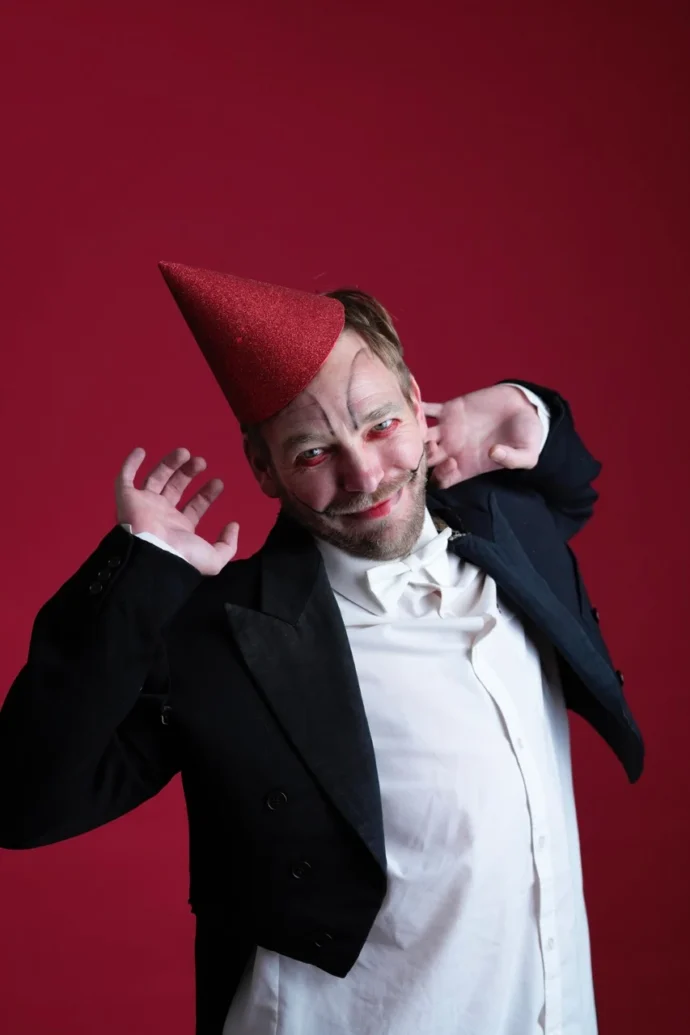
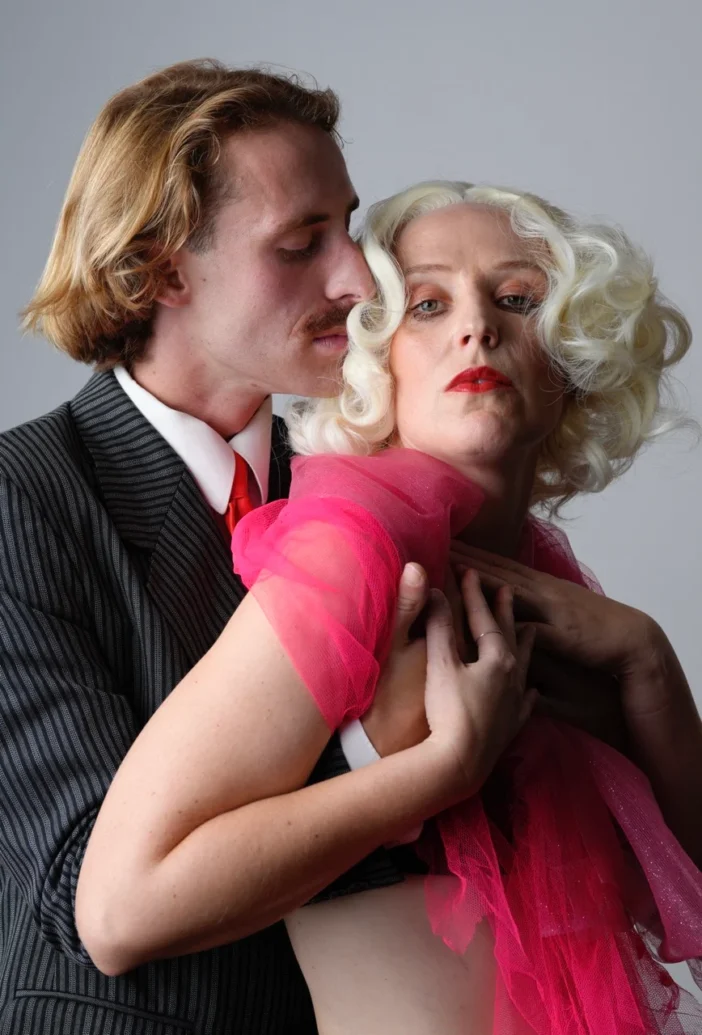
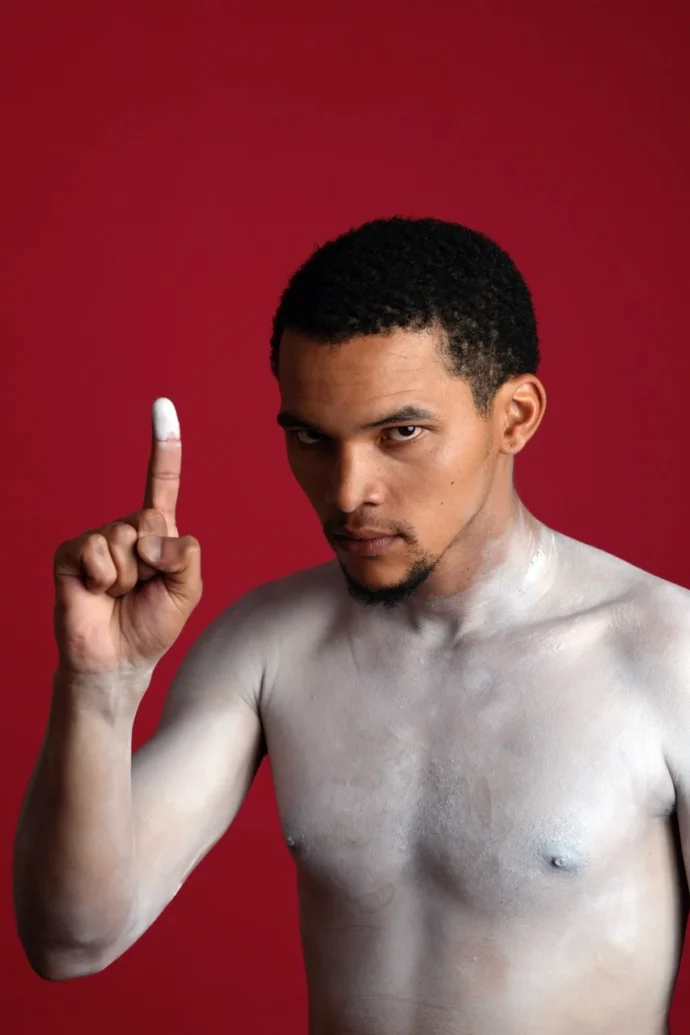
Breytenbach has a way of creating a modern mythological dreamscape where meanings are layered beneath imagery and symbolism recalling ancient rituals and classical works of art, making Boklied timeless and ever-ripe for a revisit. As in his poetry, one can return to Breytenbach’s work countless times and always discover yet another treasure in his words. The actors were all marvelous, with especially noteworthy performances given by De Klerk Oelofse portraying the mastermind Maker, Keagon Cochrane playing the role of Ritsos the rebel-poet, and Ntombi Makhutshi playing Isis.
Cochrane studied drama at Stellenbosch University (SU) from 2022, after first visiting Stellenbosch in 2020 to attend the Woordfees and seeing his first theatre production. Performing in several student productions at SU, he eventually caught the attention of Marthinus Basson, who directed and designed Boklied. In the Woordfees Programme booklet, Basson reflects on the journey of the play. He talks about how the first production “opened in Oudtshoorn to protests, slamming doors, and the news that Artscape had cancelled the run in Cape Town”, but in “Bloemfontein [they] were received with open arms and an audience that stayed behind […] to talk, debate and make sense of the experience.” Talking about the revival, he says that “the call came out of the blue, and yet another chance to work with Boklied. […] What an extraordinary opportunity, considering the loss of a great poet and great spirit, to once again engage with Breyten’s ideas […].”
Breytenbach passed away last year on 24 November in Paris, at the age of 85. He was born in 1939 in the Western Cape and studied at the University of Cape Town before leaving for Europe in his early 20s. During apartheid, Breytenbach was an outspoken critic of the regime and his political activism and opposition to racial segregation led to his imprisonment in 1975 under the Terrorism Act, after secretly returning to South Africa. Breytenbach received numerous honors, including a Civic Honour from the City of Cape Town in 2023, in recognition of his contributions to literature and society. In his work, Breytenbach often talked about exile, identity, language and justice, while especially highlighting the tension of being an Afrikaner who actively opposed the apartheid system.