By Leah Falcon
South Africa was silent at 12:00 on 21 November as thousands across the country lay together in solidarity with the women of South Africa who have been victims and survivors of gender-based violence (GBV) and femicide.
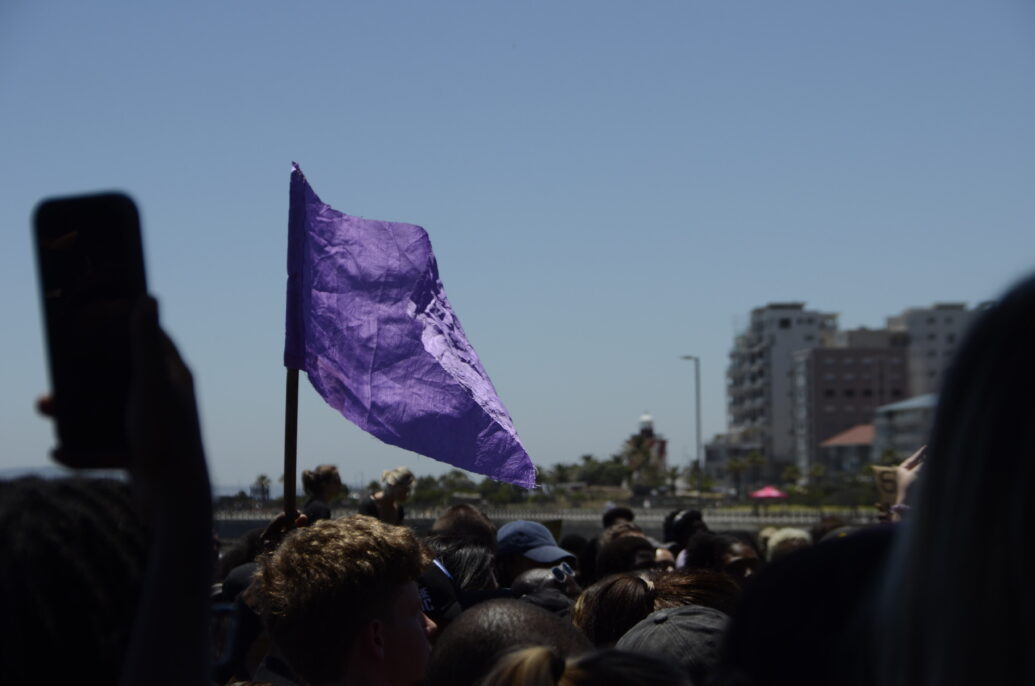
The demonstrations, organised by Women For Change (WFC), called for people across the country to lie down for 15 minutes at key spots across the country, including the Rooiplein on Stellenbosch University (SU) campus and Sea Point Promenade in Cape Town. This act of protest was preceded by a call for persons and businesses alike to turn their profile pictures purple and for women and their allies to withdraw their labour on 21 November. The purpose was to raise awareness for the horrific levels of gender-based violence that plague South Africa which see 15 females murdered each day.
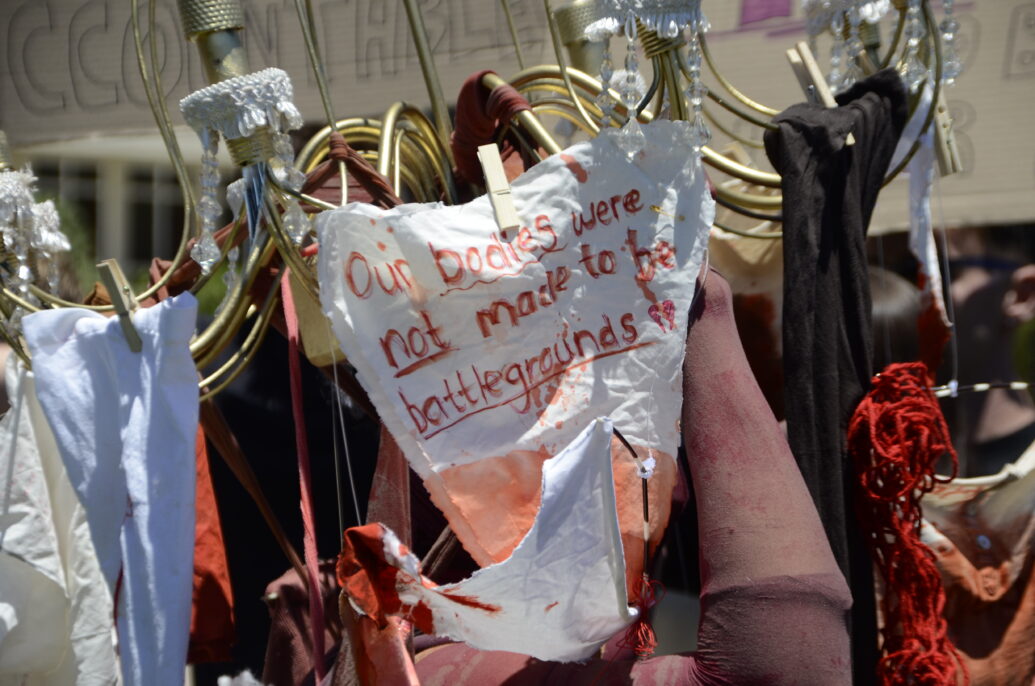
Experience of the demonstration
The demonstrations drew survivors, mothers, grandmothers, sisters, friends, brothers and sons together to call for greater discussion and action against societal corruption and the violence perpetrated against women and female presenting people. As thousands across the country lay together in mourning-black, Megan Edwards, the radio personality on HeartFM, addressed those in Sea Point, speaking the names of just some of the women who have lost their lives to GBV. “It was very emotional just looking through the crowd. People were in tears as I mentioned each of the names.” Identifying the individual lives that have been lost to this epidemic, she commented, deeply affected those present, surfacing ingrained trauma and the memories of lives lost.
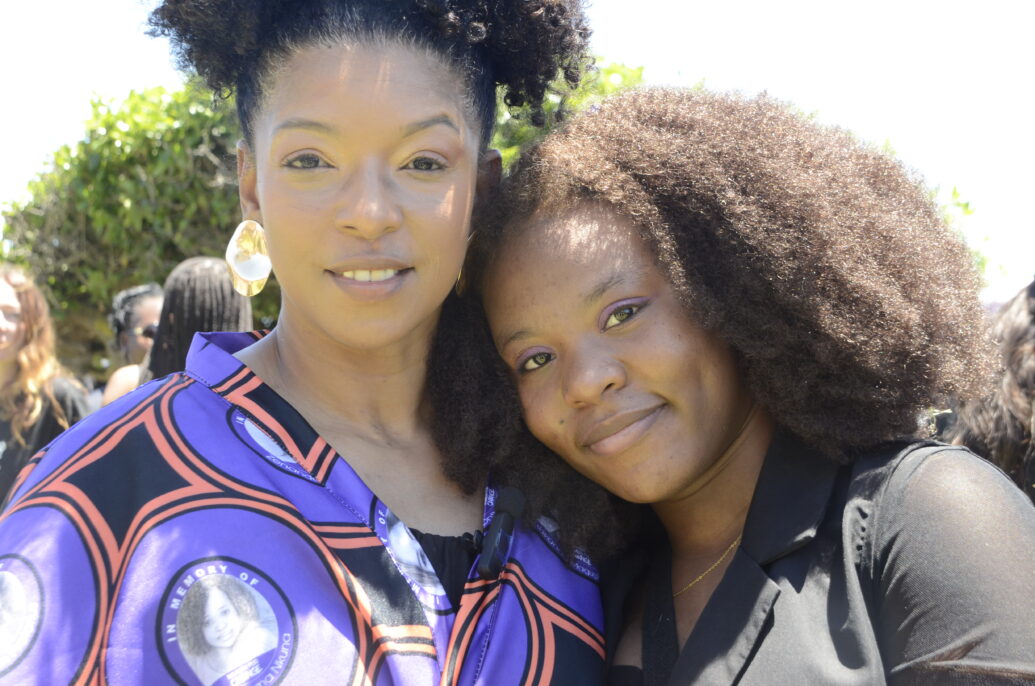
Sihle Radebe, a University of the Western Cape (UWC) student from Johannesburg, gave her reason for standing as one of the protestors, saying, “I am a victim and survivor. My mom is also a victim and a survivor. I was silenced. My mom was silenced.” She found solace in being among the protestors, saying, “Even though they might not have heard my story, I feel people backing me up during this time when I couldn’t have a voice. This is giving me a voice.”
Carol, a 75 year-old, pointed to the global experience of women, saying, “Women should have a voice. All over the world, not only South Africa, Sudan, Afghanistan – everywhere, women should be heard.”
Many commented on the feeling of solidarity that the movement has brought. Protestors spanned ages, races, religions and genders, pointing to the pervading nature of this problem in our country. Surges in anti-GBV action have occurred throughout the last few years, particularly in 2019 with the #AmINext, #EnoughIsEnough and #SAShutdown protests. Khanye, a woman at the Sea Point demonstration and a mother of a young daughter, said, “I am here because, for the first time, I’ve seen an active call to action where women, and anyone who cares about this cause, get together to mourn the lives of those who have passed and those who are going to pass. Because who knows how many people here will survive to the end of the year?”
The timing of this demonstration was far from accidental. As world leaders flew into South Africa for the G20 summit in Johannesburg between 21 and 23 November, WFC planned for their voices to pierce this forum and place pressure on the South African government. WFC has stated, “We refuse to allow South Africa to present itself as a ‘stable, growing economy’ while women’s bodies are the battlefield beneath it. The G20 Women’s Shutdown is a direct message to the world that you cannot speak of progress while women are dying.” They called for the government to acknowledge the deeply rooted gender inequality and violence in South Africa and to declare it a national disaster. This followed the rejection of WFC’s petition with over 152 000 signatures to Parliament earlier this year which called for the same measures.
Since its submission, the petition has grown to over 1,1 million signatures and as the purple profile picture flooded South Africa, the government finally took heed. On Thursday 20 November, President Ramaphosa addressed delegates at the G20 Social Summit, declaring GBV and femicide a national disaster. This declaration was signed the following day and women and allies alike await an action plan.
Government response
The WFC demonstrations illustrate South Africa’s active civil society and thriving, vocal protest culture. Equally, the President’s response in announcing GBV a national disaster illustrates the responsive government required in a democracy. However, the chasm of inaction, incompetency and corruption lies between these good intentions and real change. The government responded to the 2019 protests saying that they would take a stronger stance against GBV and announcing the five-point National Strategic Plan on Gender-Based Violence with R1,6 million in funding to improve the lives of women and children affected by GBV. However, little actual change or transparency has been seen since, with sexual offences increasing between 2019 and 2025.
The female homicide rates in South Africa remain six times the global average with 33,1% of South African women experiencing physical violence and nearly 10% surviving sexual assault. Rape levels were also reported to have increased in the report by the Minister of Police in May 2025.
The question remains what the government will do with the extraordinary powers that the legal state of a national disaster endows them. In the instance where previous legislative and administrative steps have had a negligible effect on the systemic issue that runs rampant in South Africa, can South Africans trust their leaders to make the change for women and other victims of GBV that is so clearly necessary?