By Savannah Farris
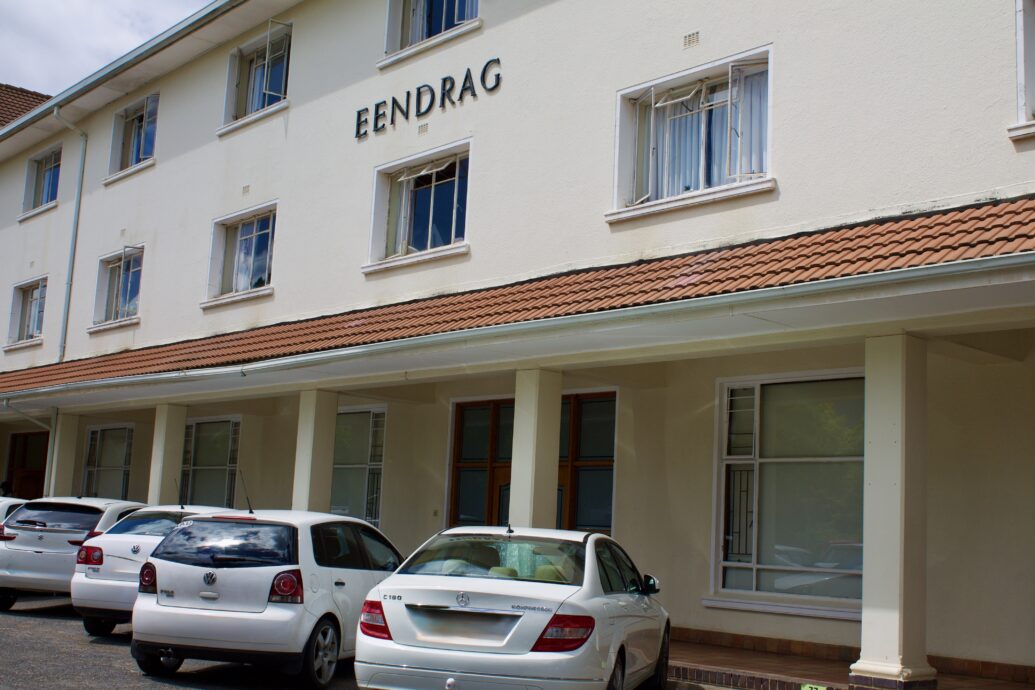
Two cars were stolen from the Eendrag Men’s Residence parking lot on Victoria Street, on 20 and 24 September. Two thefts in the span of four days prompted Die Matie to investigate the extent of car theft on the Stellenbosch University (SU) campus.
Yaa Mensah-King.
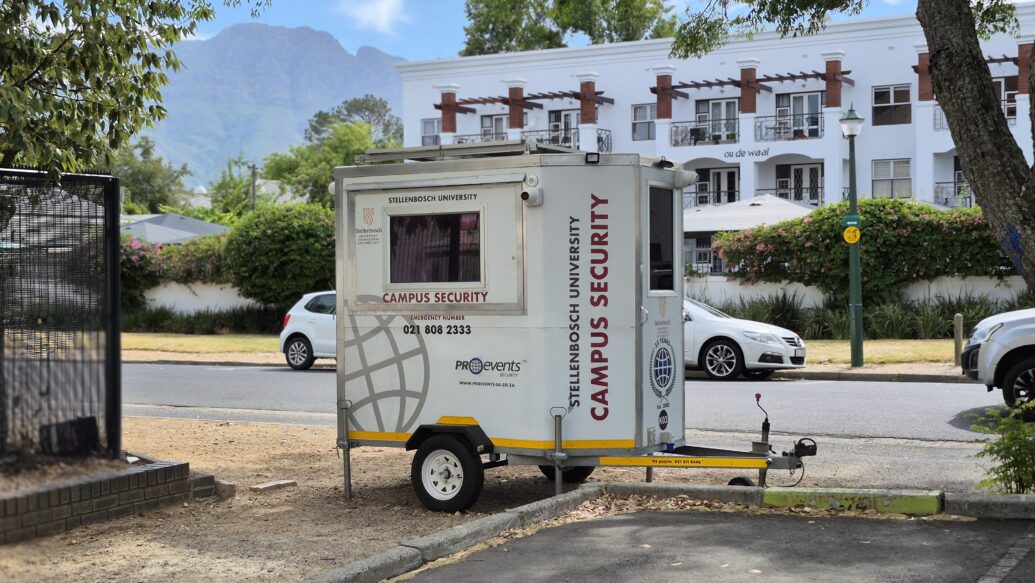
Die Matie reached out to Gerhard Koen, a third-year BEng (Chemical Engineering) student residing in Eendrag, who had his Toyota Etios stolen at 08:06 on 20 September. It was only that evening when Koen discovered his car missing and reported it to the South African Police Service (SAPS). Two weeks later, he learned that Campus Security had not shared the security footage with the SAPS as they had promised, which he believes “reduced the chance of recovering [his] vehicle and apprehending those responsible”.
For many students, a car is essential for travel around campus and visiting home during recess. Koen commented, “Losing my car felt like losing my freedom.”
In an impassioned appeal to the university, Koen said, “How many more cars – how many more students’ safety and sense of security – must be sacrificed before the university acts? The current reactive approach is failing students.” He emphasised that his frustration extends beyond his own experience by adding, “I am speaking to the press not only to seek justice for my own vehicle, but to sound the alarm for all residents who park in Eendrag. We deserve to feel safe on campus. We deserve a timely, transparent response when our property is stolen. And we deserve a university that treats student safety and property as a priority, not an afterthought.”
Danielle Claassen, Sonop Ladies’ Residence’s vice-prim, provided Die Matie with insights into her own experience with Campus Security. Response times, she said, are “always quick (and [she messages] them a lot)” and officers intervene when opportunistic individuals test car doors, looking for unlocked vehicles. Claassen said that parking booms frequently break, less so because of poor design and possibly more because “people lift them up when illegally parking in our parking lot”. As a result, Campus Security assigns officers to “booms that tend to break or parking lots where cars tend to be stolen”, she noticed.
However, Koen’s story has raised the question of how widespread the issue of car theft is across campus. Die Matie contacted the Prims from various residences to enquire about the numbers of reported thefts from the past three years. Both Thomas Claassens (Prim of Eendrag) and Thando Tshabalala (Prim of Helshoogte) reported “approximately” seven car thefts from the parking lot shared between both residences. Izan Coetzee reported two attempts, but fortunately no successful thefts from Huis Marais. Ignus van Deventer reported one in 2023, one in 2024 and two this year from Dagbreek. Melanie Peterson, Minerva’s Residence Head, reported her car being stolen from her allocated parking bay outside Minerva in 2023. Heemsteede, Huis ten Bosch, Metanoia, Huis Neethling, Harmonie and Sonop Prims reported no thefts.
“It can be confirmed that the University is experiencing a small but steady rise in the number of cars being stolen on the Stellenbosch Campus over the last few years with a spike in car thefts in recent times”, reported Martin Viljoen, SU’s Media Manager. Whilst there has been this spike, Viljoen stated that the university has invested “a lot of time, energy and resources on safety and security measures”. Additionally, Viljoen mentioned that the university “review[s the] safety and security arrangements continuously. […] [SU] identif[ies] major or new trends and adjust[s] security and safety strategies accordingly […].”
Viljoen acknowledged that SU “is an open campus intertwined with the Stellenbosch CBD [which] does […] pose unique challenges”. One of these challenges being that the distinction between what is and is not considered as “on campus” often tends to become blurred, something closed campuses do not necessarily have to manage. Viljoen explained that the Private Security Industry Regulatory Authority (PSIRA) regulations “confine Campus Security to conduct security operations only within the [u]niversity campus”.
In response to frustrations about officers not always being on post, Viljoen responded that “secure parking does not mean that all vehicles will be under surveillance all the time”. Regarding students’ arguments that their parking fees should translate to better security measures, Viljoen explained that “for the most part, parking fees go towards maintaining parking areas, and unfortunately, the University cannot guarantee that the thousands of vehicles parked (on more than 90 parking areas) on the (open) Stellenbosch campus are absolutely safe all the time. If that were the expectation, parking fees would be much higher than they currently are.”
From Viljoen’s statement, it appears to be that Campus Security should rather be viewed as an additional safety net rather than a sole safeguard. In light of this, Thomas Claassens urges his residents to use steering wheel locks, report absent Campus Security guards or suspicious activity to their House Committee, and regularly check that their cars are locked.
These various incidents and perspectives highlight a tension between the rising thefts and the security challenges associated with an open campus. While SU acknowledges that security strategies are monitored and continuously adjusted based on current trends, car theft remains an issue of concern for both students and staff.