By Jana Gous
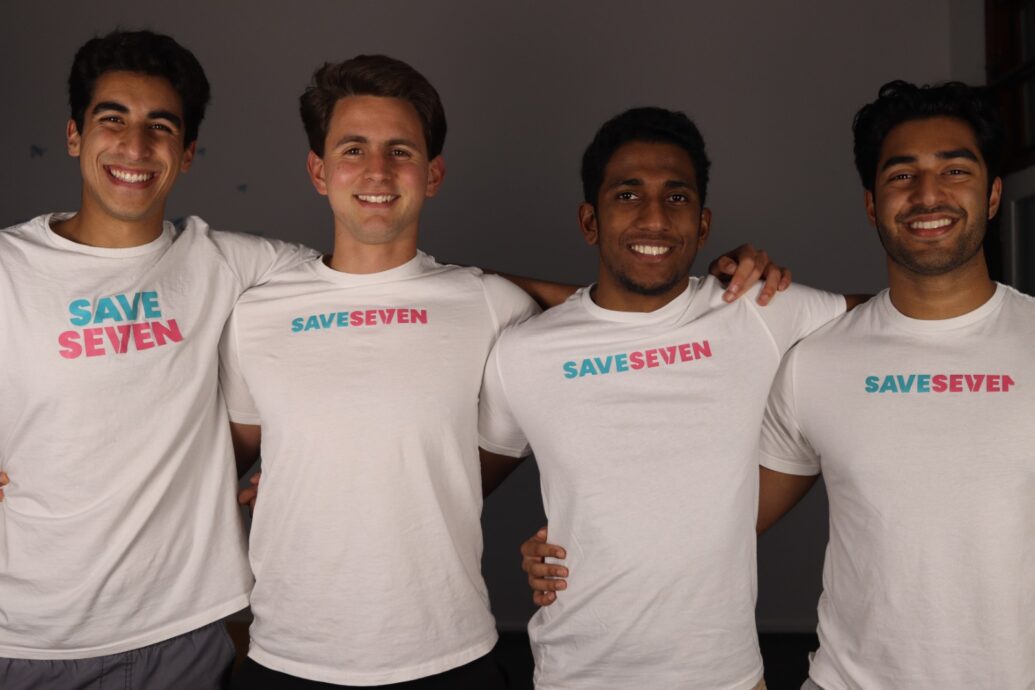
Every week in South Africa, over 60 viable organs go unused – organs that could have saved dozens of lives. But a group of Stellenbosch medical students are challenging this tragic statistic head-on. Through the creation of the LifePod, South Africa’s first dedicated organ donor management unit, and the nationwide awareness campaign, Save7, these students are proving that innovation, compassion and relentless determination can reshape the future of healthcare.
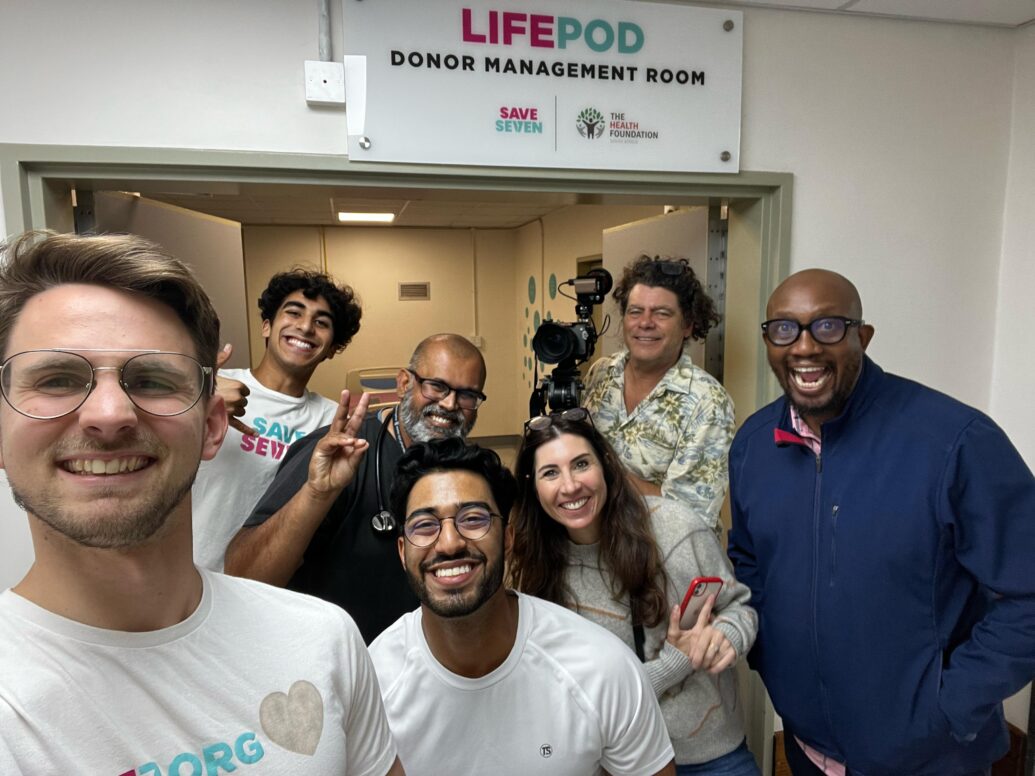
The LifePod Donor Management Room is a designated space at Tygerberg Hospital where the donor’s organs are kept alive for up to 36 hours while a suitable recipient is being found. Die Matie sat down with fifth-year medical student and Save7 founder Jonty Wright to discuss how one conversation can lead to saving seven lives, and how students are stepping up to change the narrative around organ donation in South Africa.
What initially inspired you to get involved in organ donation advocacy and to start Save7?
Jonty Wright: Meeting Lynette, our local shopkeeper, was the turning point for me. Hearing how she was fighting for a life-saving kidney – especially knowing her sister had died two years earlier waiting for one – hit me in the heart. Here was someone literally waiting to die, and it made me see that over 4 000 South Africans are in the exact same position, only 0,4% registered. Worse still, more than 60 viable organs go to waste every week. By next Saturday, another 60 organs that could save lives like Lynette’s will have gone unused. How could anyone stand by and do nothing after hearing that?”
As a medical student, how did you find the time and energy to launch something as
ambitious as the LifePod project?
In my first year, I loved experimenting with study hacks that made learning both lightning-fast and genuinely enjoyable – flashcard games, group quizzes over coffee, mind-palacing and more.
Those playful yet efficient techniques inspired me to launch SimplyMed.co.za, an interactive platform combining spaced-repetition quizzes, peer-driven discussions, and bite-sized tutorials.
Designing and iterating on SimplyMed sharpened my development and UX [user experience] skills, giving me the perfect technical foundation on which Save7 would be built after I met Lynette.
The Save7 campaign has a powerful message – saving seven lives with one donor. How has the public responded to this message so far?
The public has responded absolutely fantastically. Although we could always use more awareness. To date, we’ve reached just under 5 million people. We’ve had many partnerships
with the likes of the Springbok 7’s, Alex Forbes, Varsity Vibe and KFM – all of whom have helped us to spread the word further. More recently, we are launching a massive campaign to raise funds for our next LifePods across the country.
What are some of the biggest myths or misconceptions about organ donation that Save7 is trying to address?
“You must register on a national database.” In reality, you can sign up in under a minute through our site – no paperwork maze. And, in South Africa, the only thing that really matters is that your next of kin (for most, this is your family) agree to donate your organs after you pass on, if the situation ever comes down to it. They have the final say, so make sure they know!
“My culture or religion forbids it.” We’ve worked with faith leaders to clarify that most major traditions support donation as an act of charity.
“Doctors won’t work as hard if you’re a donor.” This is completely false; medical teams strive equally for every life. Our AI chatbot and patient support groups directly tackle these myths with facts and real‐world stories.
How has your partnership with the Blitzbokke influenced the reach of the Save7 campaign?
Partnering with the Springbok 7’s gave us a national megaphone. World‐champion players and their manager Ashley’s transplant story humanized our cause, and the Blitzbokke’s social channels carried our “Seven Lives” message into living rooms across the country.
How did the Tri for Life Campaign and Half Ironman event tie into the mission of LifePod?
The Tri for Life and Ironman 70,3 [miles or 113 km] weren’t just fundraisers – they were living metaphors for endurance in the face of long transplant waiting lists. Training and fundraising simultaneously raised R400 000 for the LifePod at Tygerberg Hospital, with The Health Foundation matching every rand raised to get us halfway to our goal. But just as importantly, every kilometre swum, cycled, and ran carried our “Save Seven Lives” message to new audiences.
The athletic challenge galvanized students and community members alike to champion a cause that requires stamina and teamwork, both in sport and in healthcare. Plus, we wouldn’t have been able to raise nearly the amount we needed without doing something crazily hard. We’ve learned that it’s hard to get people to care unless they see someone going to the literal ends of the earth because they care so much for a cause like this.
What was the most challenging part of bringing LifePod from idea to reality?
Navigating hospital infrastructure and funding constraints proved the biggest hurdle. We had to convince multiple stakeholders that dedicating ICU beds to potential donors wouldn’t detract from patient care but actually increase transplant rates. Securing R400 000 in public donations was a triumph, but translating that into equipment, staffing, SOPs [Standard Operating Procedures], and space renovation meant wrestling with procurement processes and aligning five university branches, hospital administration, and regulatory requirements – all on a student timeline.
We also had to source every piece of ICU equipment – from beds and monitors to ventilators and essential medical lines – and recruit a network of volunteers to support round-the-clock care in the new unit. This sounds like “everything” was challenging, but, really, it was. Our biggest takeaway here is that it’s more about “who you know” than “what you know”, and that, if you’re determined to make something happen, you’ll find a way (or more accurately, find someone who can point you toward the next right step).
Do you plan to expand the LifePod model to other hospitals or provinces?
Absolutely. Our goal is to “copy‐and‐paste” the LifePod blueprint nationwide. We’ve already built a network of transplant contacts and branch managers in five universities, and partnerships with the Health Foundation and provincial health departments are underway. With Save7+ membership funding and ongoing mentorship from Prof. Elmin Steyn’s network, we aim to launch additional pods in Gauteng in the coming years.
However, the LifePod at Tygerberg was based on months of research and real-time feedback from industry experts working in this ecosystem, and we’d be fools not to do the same level of due diligence going forward. Our Wits and Tuks units are working closely with the transplant coordinators in Gauteng to understand what the lay of the land looks like. Who knows, maybe the best intervention is a LifePod, maybe it’s something completely different. Whatever we do, we want our time and energy devoted to the activities that are most likely to get life-saving organs to more people in desperate need just like Lynette.
How can students and young people get involved in Save7 or support organ donation
more broadly?
→ Register as an organ donor at save7.org in under a minute.
→ Send the WhatsApp to your family. Remember, they’ll have the final say, no matter where you’re registered. So please ensure that you’ve made your wishes clear to donate your organs and save seven lives. If you need help doing this, we’ve created a simple “Send WhatsApp” feature on the home page of www.save7.org.
→ Volunteer with any of our campus branches – help run info stalls, social‐media takeovers, or training modules for healthcare workers. Use this form and we’ll contact you.
→ Fundraise or race in our Tri for Life events to directly support units and any future LifePods across the country.
→ Share stories: boost our “Seven Lives” message on your networks or host a myth‐busting session in your student society.
→ Join Save7+ for monthly giving and exclusive updates on LifePod progress.
Every student ambassador helps transform one donation into seven lives – and every share, sign‐up, or fundraising kilometre brings us closer to a South Africa where no organ goes unused.