By Zandri van Greunen
The Zive Usekhaya: Language and Belonging workshop, hosted by Stellenbosch University (SU) Language Centre from 7 to 9 October, explored how language influences students’ sense of belonging at SU. The workshops invited students to reflect on their personal connections to language and identity, and are a new initiative driven by the Language Centre’s team.
The staff members who initiated and presented the workshop, and who are involved in the related research, were Helga Sykstus and Bongiwe Dlutu, both lecturers and coordinators at the Language Centre. They were joined by Sanet de Jager, a senior interpreter, and Dr Arné Binneman, the Head of Multilingual Learning. Other staff members involved in the workshops were Jadey Sass, a lecturer in Academic Literacies and Professional Communication, Siphiwo Mkondweni, an isiXhosa language facilitator and Nika Ndlela, an ad hoc facilitator who supports one of the Language Centre’s short courses. The workshops form part of an ongoing research project. The staff members facilitated discussions using the United Nations Educational, Scientific and Cultural Organization’s (UNESCO) story circle framewok. This framework promotes intercultural competency through active listening and shared storytelling.
Students were grouped into small groups with peers they had not met before as part of the story circles. The first task involved answering prompts one at a time, while the others listened attentively without responding immediately. After each person had shared, the group reflected on what stood out in each individual’s narrative. “What stood out to me was the willingness to be vulnerable,” said Wendy Levac, a third-year B in Social Work student. “We were able to engage with different perspectives and ways of thinking.”
Other activities included reflective exercises where students wrote down ten words that defined “belonging” to them. The group then discussed how language connects to identity and belonging. Many students shared that speaking their home language or cooking cultural meals made them feel at home.
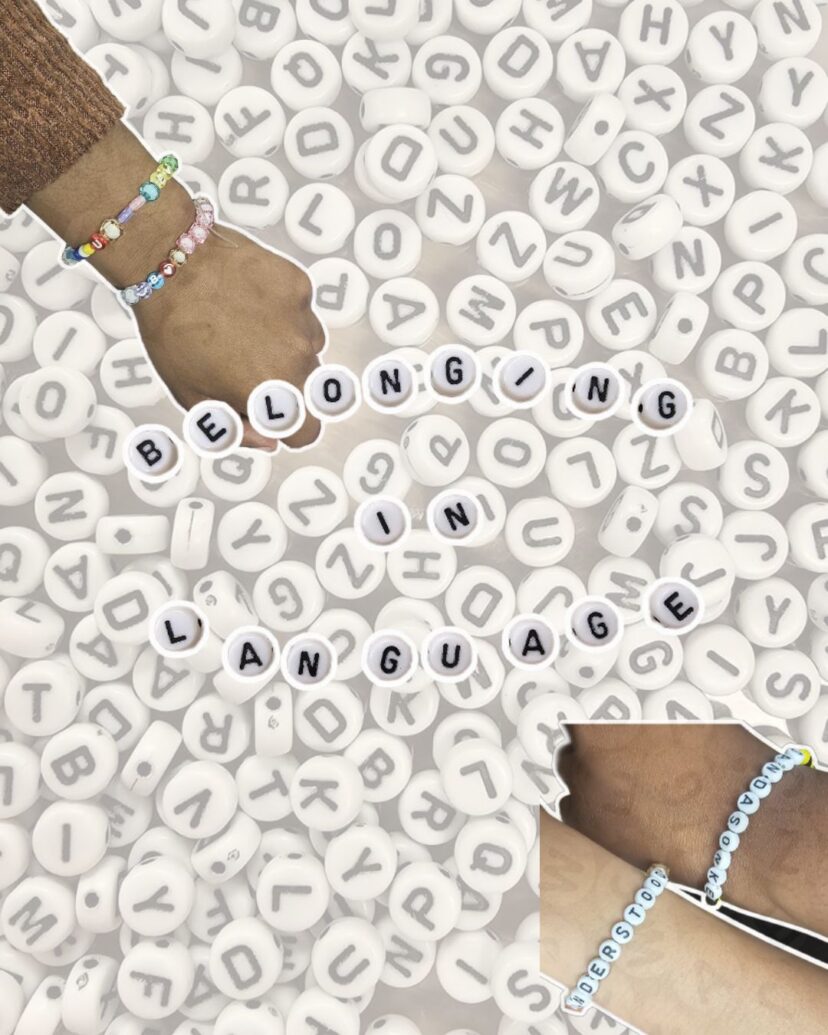
The workshop ended with a creative beading activity. Students made bracelets, keychains, and necklaces with words like “gemeenskap”, “sandasonke,” and “listen”. These items served as personal reminders of what students can take away from these workshops.
Binneman highlighted the significance of growing a multilingual mindset on campus. “The workshops were about creating a space for students to listen to stories they might not otherwise hear. It’s about respecting people, languages and cultures,” Binneman explained. She was also surprised by the strong interest, with nearly 200 students signing up. “This shows that students have a genuine appetite to engage with language and multiculturalism.”
The workshops sparked not only conversations, but meaningful connections between students. Through shared stories and reflections, it became evident: fostering empathy and openness is essential to shaping a more inclusive campus for all.
*On the 25 and 26 November 2025 the following changes were made to this article by Die Matie:
* The Language and Belonging workshops were not a continuation of Languages Week, but a new initiative driven and researched by the following Language Centre staff members: Helga Sykstus, Sanet de Jager, Bongiwe Dlutu and Dr Arné Binneman.
* Siphiwo Mkondweni is not an interpreter but an isiXhosa language facilitator.
* Nika Ndlela is an ad hoc facilitator who supports one of the Language Centre’s short courses.
* The positions of the following staff members were added: Sanet de Jager as senior interpreter, Helga Sykstus as lecturer and coordinator and Bongiwe Dlutu as lecturer and coordinator.